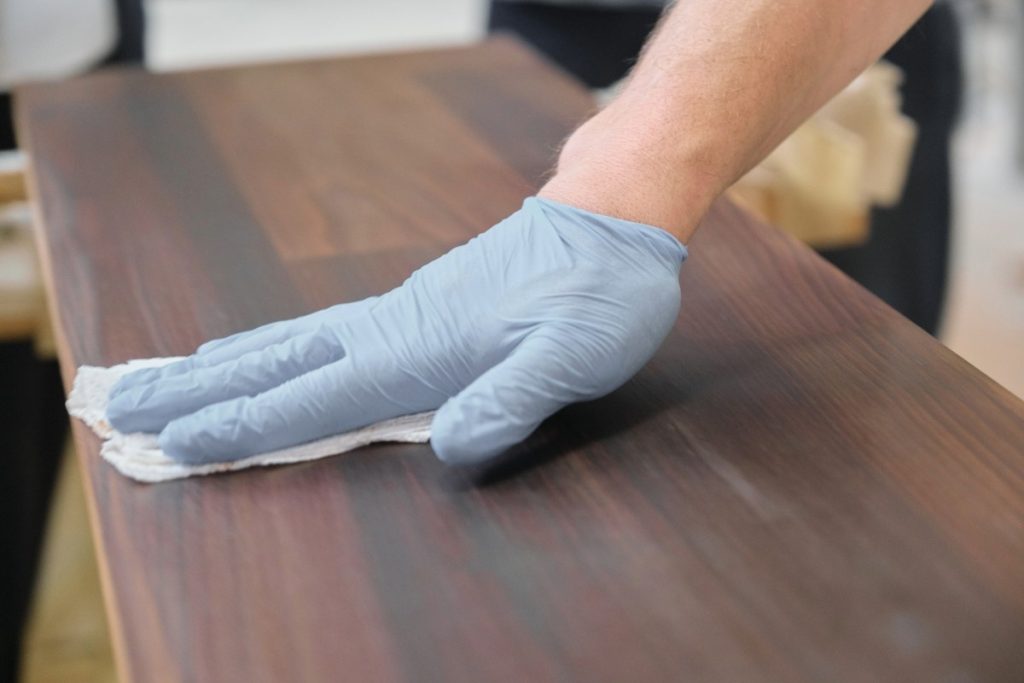
Wood staining isn’t just picking a colour and brushing it on. The grain underneath does most of the deciding: how it takes, where it pools, whether it looks even once it’s dry. We’ll test on an offcut if there is one, work with the grain instead of fighting it, and build up thin coats slowly so you don’t end up with blotchy patches.
Once that’s dried properly, varnish goes over, matte, satin, gloss, whatever the piece actually calls for, and that’s what takes the daily knocks.

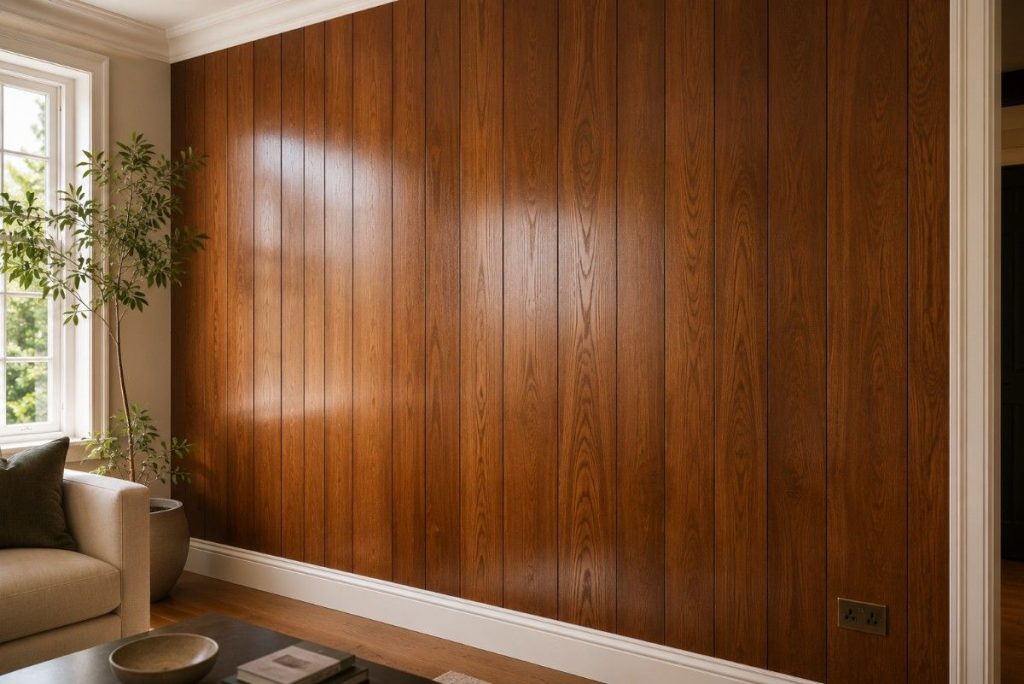
No blotchy patches, no patchy sheen, just proper timber staining that brings the grain out rather than hiding it.
We work with the wood’s natural pattern rather than covering it up with heavy, opaque coats.
Careful, even application means the stain absorbs consistently across the whole surface.
A durable clear finish seals the wood against knocks, moisture, and everyday wear.
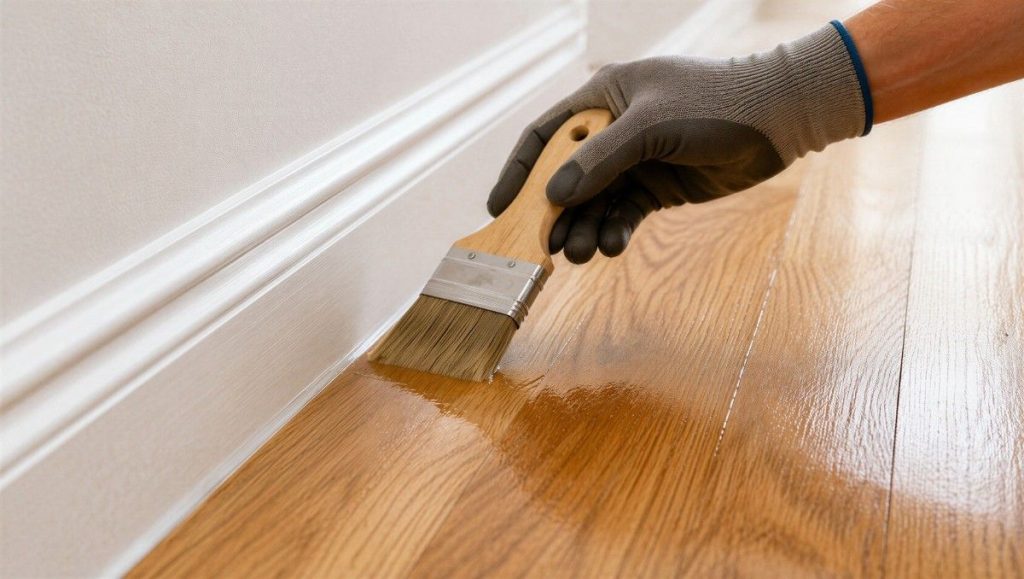
Floors and staircases take the most footfall in a house. Our timber varnishing is built to hold up over years of daily wear, not just look good on day one.
Doors, frames, and window sills get the same attention as bigger pieces, with interior wood finishing that matches the rest of the room rather than standing out as an odd shade.
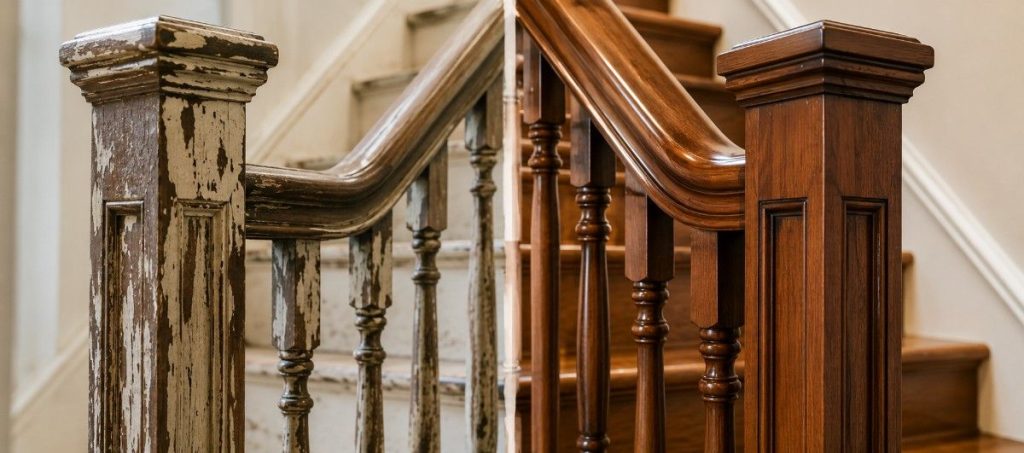
Bannisters, shelving, and furniture need a steadier hand, more detail, tighter corners, and less room for drips. Wood finishing on pieces like this is slower work, but it shows in the result.
It depends on the stain and the room. Oil-based stains generally take longer than water-based ones. A damp or cold room slows things down further. We’ll usually give you a realistic drying window before starting, not just a generic answer.
Yes, floors are actually one of the more common jobs we get called out for. Different areas need different approaches. A floor takes far more wear than a shelf, so the varnish and number of coats vary.
We can, though it’s never a perfect science with wood. No two pieces take stain quite the same way. We test first and adjust before committing to the whole piece.
Staining changes the colour. Varnishing protects it. Some finishes do both at once. Others need staining first and a clear varnish over the top. We’ll talk you through what makes sense for your piece.
Every piece of timber takes finish differently, so guessing rarely works. Tell us what you’re working with, and we’ll recommend the right approach before you start anything.
Seal open oak shelves, wooden table tops, or pine floorboards with clear protective varnishes to highlight real grain.